Overview
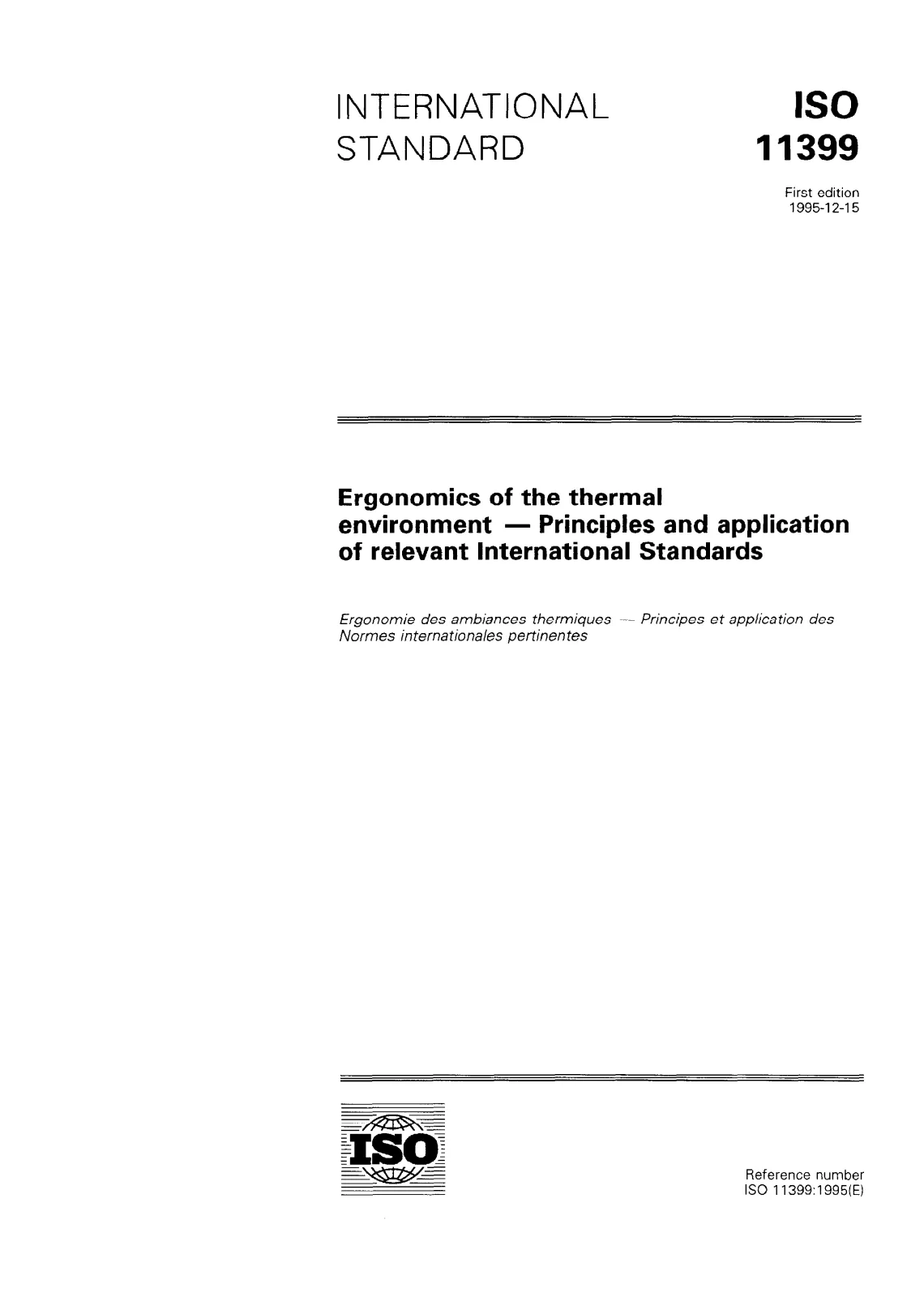
ISO 11399:1995 - Ergonomics of the thermal environment provides a high-level framework for the correct, effective and practical use of International Standards that address human responses to thermal environments. It describes the underlying principles of thermal ergonomics and explains how complementary ISO standards (for hot, moderate and cold environments) relate and can be used together. Annexes give principles of assessment, future work and references.
Key topics and technical scope
- Core environmental and human parameters: air temperature, mean radiant temperature, humidity, air velocity, clothing insulation and metabolic heat production.
- Principles of human thermoregulation, heat balance and measurement concepts used across thermal standards.
- Guidance on combined use of standards for:
- Hot environments (WBGT index; analytical and diagnostic approaches)
- Moderate environments (PMV/PPD comfort indices)
- Cold environments (required clothing insulation / IREQ and Wind Chill Index)
- Guidance on measuring physiological and subjective responses (heart rate, core/skin temperature, sweating, subjective scales).
- Emphasis that ISO 11399:1995 is a principles-and-application guide - it directs users to the specific normative standards for detailed assessment and measurement procedures.
Practical applications and who uses it
ISO 11399:1995 is targeted at professionals who need to select and apply the appropriate ISO thermal ergonomics standards, including:
- Ergonomists and occupational hygienists assessing workplace thermal risk and comfort.
- Health & safety managers developing heat/cold exposure controls and medical surveillance programs.
- HVAC and building designers optimizing thermal comfort in indoor environments.
- Clothing and PPE specialists selecting insulation/evaporative resistance (cold/hot protective clothing).
- Researchers and regulators coordinating standards-based thermal assessments.
Typical applications:
- Rapid heat-stress screening (using WBGT guidance linked by ISO 11399).
- Designing indoor thermal environments to meet PMV/PPD comfort criteria.
- Specifying clothing for cold exposure (IREQ) and planning rest/work cycles.
- Integrating physiological monitoring and subjective assessment into occupational assessments.
Related standards (examples)
ISO 11399:1995 explains how to apply and link these key standards:
- ISO 7243 (WBGT heat-stress assessment)
- ISO 7933 (analytical heat-stress / required sweat rate)
- ISO 7730 (PMV and PPD for thermal comfort)
- ISO/TR 11079 (cold environments, IREQ and Wind Chill Index)
- ISO 7726 (instruments and measurements), ISO 8996 (metabolic rate), ISO 9920 (clothing insulation), ISO 9886 (physiological measurements), ISO 10551 (subjective judgement scales)
ISO 11399:1995 is useful as a roadmap for applying thermal ergonomics standards consistently and coherently across workplace, building and product design contexts.

 Открыть превью (PDF)Ergonomics of the thermal environment — Principles and application of relevant International Standards